Release
Translation by Hanifah Salma
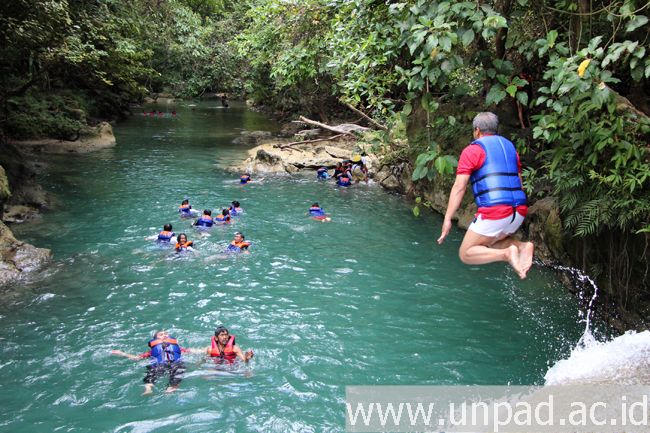
The government’s efforts to promote tourism intensively (also called hard selling) during the midst of an ongoing pandemic situation have drawn reactions from various parties. This was revealed by Universitas Padjadjaran’s Faculty of Communication Science lecturer, S. Kunto Adi Wibowo, PhD
The communication and media researcher explained that based on social media big data analysis, the netizens have been discussing the steps that the government takes for this sector, both in positive and negative sentiment.
“From August to September, there have been a lot of negative discussions on social media where people are confused about what to do. Do you travel or just stay at home,” said Kunto when he acted as a speaker at The 2nd Padjadjaran Communication Conference Series: The Role of Communication Science in Enhancing Collaborative Actions, held online by Unpad Faculty of Communication, Thursday (01/10) as quoted from Ayobandung.
The emerging discussion was revealed following reports that stated there was a surge in positive cases of COVID-19 in Bali last September. This was due to the reopening of Bali as a domestic tourist destination by the local government.
Immediately, the tourism promotion policy that took help from influencers ended up reaping negative sentiments on social media. Kunto judged that the tourism promotion program by influencers that encourage people to travel during the COVID-19 pandemic is an inappropriate policy.
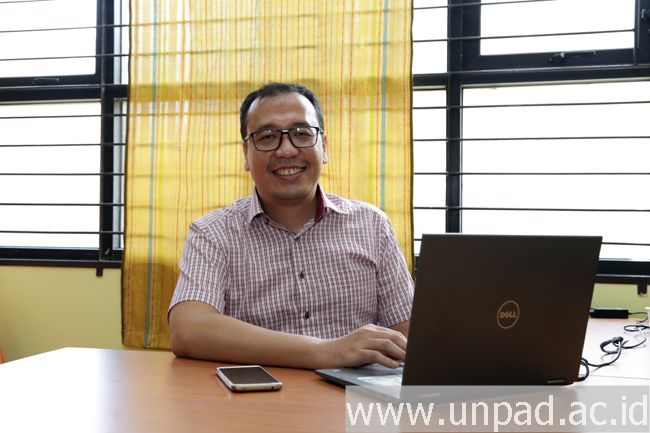
He also found an increasing number of press releases issued by the Ministry of Tourism of The Republic of Indonesia for the mass media and the public. The number of press releases that increased exponentially from February to March and March to April showed the government’s insistence to carry out public communication regarding the situation in the tourism sector.
However, the communication was deemed unable to clear up the situation for the people at the desired level of expectations. Kunto said that this happened because, at that time, the government failed to predict the emergence of a pandemic as a crisis that must be confronted.
“We are not ready for a crisis. What we are prepared for is natural disasters such as earthquakes or tsunamis, not a pandemic. So, in the end, what the government did is continuing the business, as usual, maintaining the economy through hard selling,” he said.
Furthermore, Kunto explained that the best effort that can be made by the government to carry out public communication in the tourism sector during the pandemic is to include humanity aspects.
According to him, the government could tell the story of how the tourism community tries to survive the pandemic instead.
“We have to be able to make people realize that we have resilience, that we have the ability to survive. The most important thing is to continue to inform some concrete steps that must be taken in a pandemic and to continuously declare that we are in this situation together,” he said.
He also emphasized the importance of public communication that leads to action (Call to Action communication) concerning things that must be done in the tourism sector during the pandemic. Some of the examples mentioned are actively campaigning for the use of face masks, physical distancing, and other health protocols.
The international seminar presented three other speakers, namely Prof. Dr. L. Jan Slikkerveer (Leiden University), Prof. Dr. Franck Lavigne (Panthéon-Sorbonne University), and Prof. Deddy Mulyana, Ph.D. (Professor of Unpad Faculty of Communication Science).(arm)*
You can read the original article in Indonesian here: https://www.unpad.ac.id/2020/10/kebijakan-hard-selling-pariwisata-selama-pandemi-dinilai-tidak-tepat/